


Many parents start thinking about adulthood and feel unsure about what comes next. When you’re raising a child with autism, the future can feel especially unclear. A child can be smart, verbal, and capable, yet still need support. This is where guardianship for high-functioning autism often comes up.
In this guide, we’ll walk through what guardianship really means in everyday terms. We’ll talk about why some families consider it and why others don’t. You’ll learn what questions to ask before making any decisions. Most of all, this guide is about helping parents feel clearer, not pressured.
Want to stay connected for more weekly tips? Join our newsletter, it’s free, helpful, and tailored for parents like you.

Key Takeaway:
- Special Needs Guardianship Is Not Automatic
Special needs guardianship should never be assumed just because of an autism diagnosis. Many adults can make decisions with the right supports in place. Planning should reflect real daily needs, not fear. - Support Needs Can Change Over Time
Abilities and challenges often shift as teens become adults. What works now may not work later. Flexible planning allows families to adjust without rushing decisions. - Trusted Guidance Makes a Difference
Legal and support choices can feel overwhelming. Having reliable information helps parents feel steadier. Families can explore support through The Autism Voyage when they’re ready.
Table of contents:
- What Guardianship for High-Functioning Autism Means
- Do People With High-Functioning Autism Need Guardianship?
- Finding Support with The Autism Voyage

Disclaimer: All content on TheAutismVoyage.com is for informational purposes only and is not a substitute for medical, legal, financial, or clinical advice. Please consult licensed professionals as needed.
What Guardianship for High-Functioning Autism Means
Parents often hear the word guardianship and feel overwhelmed. Guardianship for adults with autism is a legal way to help with certain adult decisions. It is meant to offer protection, not control. Independence can still exist in many areas.
Here’s what guardianship usually covers in simple terms:
A legal way to support an adult with important decisions
Shared or transferred rights for medical, financial, or legal matters
Support focused only on areas where help is needed
At its core, guardianship is about safety and guidance. It does not remove daily choices or personal voice. Each arrangement depends on real-life abilities. Understanding this helps parents plan with less fear.
Visit high functioning autism symptoms to better understand when support may be needed.

What Guardianship Is Not
These are common concerns parents have when the topic first comes up.
| Common Belief | What Parents Should Know |
|---|---|
| Guardianship lasts forever | It can change or end as needs change. |
| Guardianship means full control | It only covers specific decisions. |
| It removes independence | Many adults keep daily choices. |
| Autism requires guardianship | A diagnosis alone is not enough. |
This helps parents see guardianship as support, not a permanent label.

Guide for Writing a Letter of Intent for Families with Special Needs
This guide provides you with essential tips for crafting a Letter of Intent. Perfect for families navigating the complexities of planning for a special needs future.
Do People With High-Functioning Autism Need Guardianship?
Many parents ask this as adulthood gets closer. Autism alone does not mean someone cannot make decisions. A person may speak well but still struggle under pressure. This is why guardianship for special needs adult decisions must be based on daily life, not a diagnosis.
Parents usually notice challenges in specific areas, not everything at once. These patterns help families decide what kind of support is truly needed.
- Executive function issues can affect planning, money, and follow-through
- Communication may break down during stress or conflict
- Judgment can be impulsive or unsafe in real-world situations
With that in mind, support needs often fall on a spectrum. Changes over time can add to the confusion, especially during adulthood transitions.
Visit does high-functioning autism get worse with age to help parents understand what’s actually changing and why informed planning matters.
Situations Where Guardianship May Be Appropriate
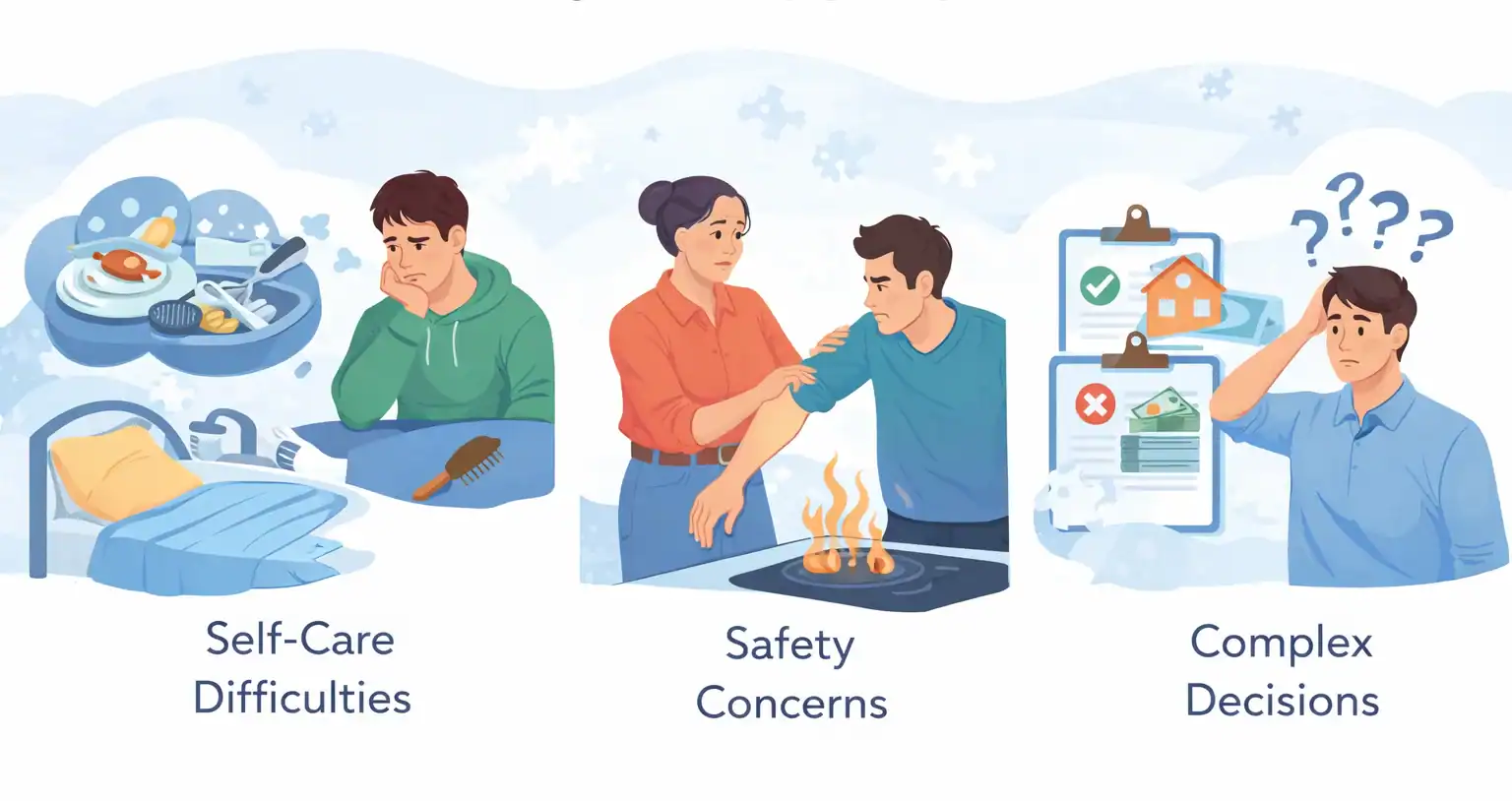
There are times when legal help is necessary. Signs someone with autism may need a guardian often show up around safety, health, or money. Missed medical care, risky spending, or being easily pressured are common red flags.
How to Get Guardianship of a Special Needs Child
The guardianship process and requirements by state can look very different depending on where you live. Most families need medical input, legal paperwork, and court approval. The process can feel emotional, so starting early helps reduce stress.
Here’s what families usually experience during the process:
State-specific rules and timelines
Medical or professional evaluations
Legal forms and documentation
A court review or hearing
Ongoing reporting or check-ins, depending on the state
Alternatives to Guardianship You Should Consider
Before choosing between legal guardianship vs. supported decision-making, it helps to see how each option works in real life.
Here are common alternatives families use instead of full guardianship:
| Option | How It Helps Day to Day | Why Families Choose It |
|---|---|---|
| Supported Decision-Making Agreements | The adult makes choices with trusted guidance. | Keeps independence while adding support. |
| Medical Power of Attorney | Parents help with health decisions. | Avoids court involvement. |
| Financial Power of Attorney | Help managing bills and benefits. | Reduces money mistakes. |
| Limited Guardianship | Support only in specific areas. | Prevents over-control. |
| Combination of Tools | Mix of POA and supports. | Fits changing needs over time. |

Finding Support with The Autism VoyageEmpty heading
Many parents feel stuck when guardianship comes up. Finding a special needs guardianship lawyer or trusted help can be hard. The Autism Voyage helps families find support and resources that helps the next steps. Support is shared at a pace families can handle.
These resources make it easier to start:
- Find trusted help in the Special needs professionals directory
- Get guidance through special needs financial planning services
- Talk through your financial journey request a consultation today!