


Many adults grow up feeling a little different but never knowing why. They learn to cope, blend in, or push through. Over time, that effort can feel exhausting. Small struggles start to add up quietly.
Research on navigating neurodivergence helps explain why these experiences are so common and overlooked. This is often when signs of neurodivergence in adults start to make sense. The realization can feel emotional and relieving at the same time.
In this guide, we'll take a look at patterns many adults recognize in themselves. These moments often come with relief and is about understanding yourself, not putting yourself in a box.
Want to stay connected for more weekly tips? Join our newsletter, it’s free, helpful, and tailored for parents like you.
Key Takeaway:
- Neurodivergence shows up in many everyday ways
There is no single way neurodivergence appears in adulthood. Some notice emotional patterns, while others see learning or focus differences. These neurodivergent traits in adults often show up quietly in daily life. - Noticing patterns can bring relief
Many adults spend years feeling “off” without knowing why. When patterns finally make sense, it often brings relief instead of worry. Understanding helps reduce self-blame and unanswered questions. - Support works best when it’s flexible
Neurodivergence does not need to be fixed. Understanding needs helps families adjust expectations. Small changes can make daily routines smoother. - Strengths deserve just as much attention
Creativity, problem-solving, and focus are common strengths in neurodivergent adults. These strengths are often missed when challenges get all the attention. Seeing the full picture builds confidence and self-worth. - Late understanding is still valid
Many adults recognize neurodivergence later in life. This timing does not make the experience less real or important. Understanding at any age can bring clarity and emotional relief. - Reliable resources help families move forward
Parent-centered education can make a big difference. Many families find steady guidance through The Autism Voyage. The right information helps reduce fear and uncertainty.
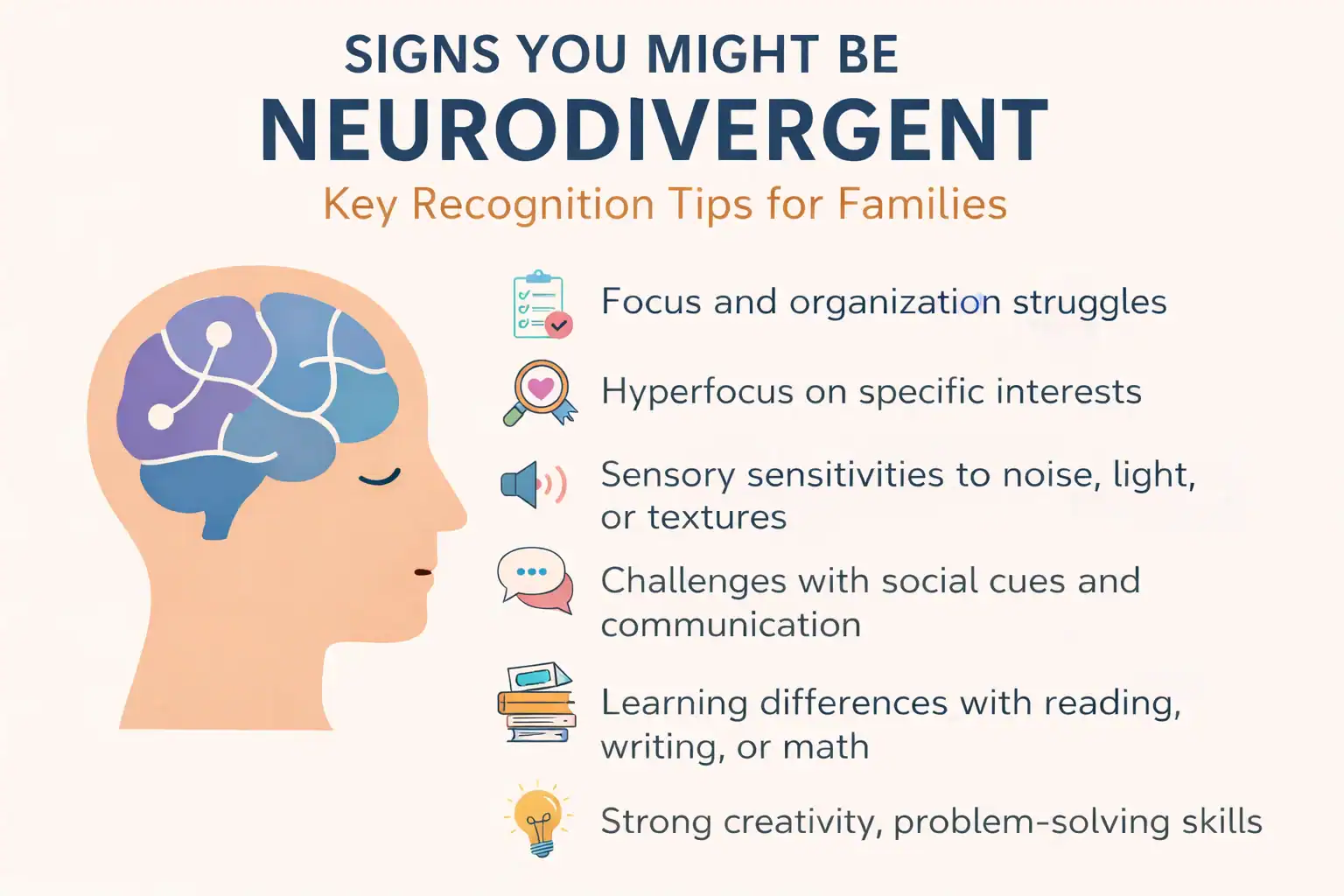
Table of contents:
- What Is Neurodivergence?
- Common Signs of Neurodivergence in Adults
- How to Support Neurodivergent People
- FAQs

Disclaimer: All content on TheAutismVoyage.com is for informational purposes only and is not a substitute for medical, legal, financial, or clinical advice. Please consult licensed professionals as needed.
What Is Neurodivergence?
Neurodivergence means the brain works in different ways. It helps explain why some people think, learn, or react differently. Many parents start wondering what are signs of neurodivergent when daily life feels harder than expected. These questions usually come from real family experiences.
Here are a few common things parents often notice first:
Daily tasks feel harder than they should, even with effort
Emotions may feel bigger or harder to manage
These neurodivergent symptoms in adults often showed up years earlier
As families learn more, things begin to click in quiet ways. Understanding brings relief instead of fear. Parents often look back with more compassion. It helps make sense of past struggles.
Want to read more? Visit this article on high-functioning autism to help you connect a few dots that can bring a lot of quiet clarity.

Is Neurodivergence a Disorder?
Neurodivergence is not automatically a disorder. It simply means the brain works differently from what’s considered typical. Many adults live full lives without ever being diagnosed.
Common Conditions Associated With Neurodivergence
Neurodivergence can include conditions like autism, ADHD, dyslexia, and more. These often overlap, which is why adults may relate to several traits at once. Seeing this bigger picture helps parents focus on understanding rather than labels.

Common Signs of Neurodivergence in Adults
Many adults don’t notice patterns until life becomes more demanding. The signs of neurodivergence in women are often quieter and easy to miss. The signs of neurodivergence in men may look more obvious but are still misunderstood. These signs usually show up in daily routines, not big moments.
Here are some common signs families often recognize over time:
Ongoing struggles with focus, planning, or follow-through
Feeling drained after social interactions or busy environments
Masking challenges to appear “fine” around others
As parents learn more, these patterns start to make sense. Looking back often brings relief, not blame. It helps families understand behavior with more patience. Small insights can change how daily life feels.
Does this seems familiar? Visit cognitive communication deficit to help you better understand what may be happening beneath the surface.
Difficulty With Focus, Organization, or Executive Functioning
Tasks can feel overwhelming even when they seem simple to others. Planning, starting, or finishing things may take extra energy. This is often mistaken for laziness when it’s not.
Hyperfocus on Specific Interests
Some adults can focus deeply on topics they enjoy for long periods of time. They may lose track of time when fully engaged. This intense focus can be both a strength and a challenge in daily life.
Sensory Sensitivities to Noise, Light, or Textures
Certain sounds, bright lights, or clothing textures can feel overwhelming. These reactions can cause stress or fatigue in busy environments. Many adults quietly avoid situations to protect their comfort.
Challenges With Social Cues or Social Fatigue
Social interactions can feel draining, even with people they care about. Reading tone, timing, or body language may take effort. Needing recovery time after social events is common.
Learning Differences in Reading, Writing, or Math
Learning may happen differently, not slower. Some adults struggled in school but never knew why. These differences often go unnoticed until adulthood.
Strong Creativity, Problem-Solving, or Visual–Spatial Skills
Many neurodivergent adults are highly creative thinkers. They may see patterns others miss. These strengths are often overlooked but deeply valuable.

Guide for Writing a Letter of Intent for Families with Special Needs
This guide provides you with essential tips for crafting a Letter of Intent. Perfect for families navigating the complexities of planning for a special needs future.
How to Support Neurodivergent People

Support begins with understanding, not fixing. Many adults struggle quietly with executive dysfunction in adults, especially around planning and follow-through. These challenges can affect daily routines and family life. Small changes in support can reduce a lot of stress.
Here are simple ways families often offer support at home:
Break tasks into smaller, manageable steps
Allow extra time for transitions and decisions
Focus on progress instead of perfection
As parents adjust expectations, things often feel calmer. Support works best when it’s flexible and kind. Feeling understood can make a big difference. Small shifts can lead to steadier days.
How The Autism Voyage Helps
The Autism Voyage focuses on education, clarity, and real-life support for families. It helps parents understand patterns without pressure or labels. The goal is to make resources feel calmer and more manageable.
For family-centered guidance beyond daily support, explore Special needs financial planning services or need help in financial clarity journey? Reach out to us anytime!
Special Needs Professional Directory
Finding trusted help can feel exhausting for families. A reliable directory saves time and reduces guesswork. It helps parents connect with professionals who understand neurodivergent needs.
Find and explore trusted support through the Special needs professionals directory.

FAQs
Many parents reach this point with lingering questions. A sign of neurodivergence can be easy to overlook at first. The signs of a neurodivergent person often show up in daily routines, not big moments. Wanting clarity is a natural part of understanding.
As families learn more, answers often feel less overwhelming. Understanding grows step by step. Parents gain confidence as things start to make sense. Questions become part of the journey, not a problem.
Here are some common questions families often ask:
What strengths and abilities are common in neurodivergent individuals?
Many neurodivergent people have strong creativity or problem-solving skills. Some notice details others miss or think in unique ways. These strengths often grow when the right support is in place.
Is being neurodivergent considered a disability, and what accommodations help?
Neurodivergence itself is not always a disability. Some people may need support at work or school, while others do not. Simple accommodations can make daily life feel more manageable.
How is neurodivergence diagnosed, and what support options are available?
Some adults seek a formal evaluation, while others do not. Support can come from learning strategies, routines, or community resources. Many families start with education before taking next steps.
Can neurodivergent people be successful and thrive in daily life?
Yes, many neurodivergent people live full and successful lives. Success may look different from person to person. Understanding strengths and needs makes thriving more possible.