


Can you have multiple life insurance policies? Yes, it is legal and common in the United States to have multiple life insurance policies, either with the same company or different insurers.
People often use multiple policies to cover specific financial needs, such as paying off a mortgage, replacing income, or funding education. Insurers will review your financial situation and may limit the total coverage amount based on your income and overall finances.
For special needs families, multiple policies can play an important role in long-term planning. One policy may provide income protection for the household, while another can fund a special needs trust, helping ensure lifelong financial support without affecting eligibility for benefits like SSI or Medicaid.

Key Takeaway:
- You can hold more than one life insurance policy. It’s completely legal.
- Insurers cap total coverage based on your finances. Too much can lead to denial.
- Employer coverage is often limited. It’s rarely enough for special needs planning.
- Blending term and permanent insurance is common. Multiple policies can fund a Special Needs Trust properly.
- Over-insurance can strain your budget. Coverage should match a long-term family care plan.
For more clear, parent-focused insights, subscribe to The Autism Voyage newsletter.
Table of contents:
- Can You Have Multiple Life Insurance Policies?
- Why Special Needs Families Often Need More Than One Policy
- Smart Ways to Structure Multiple Life Insurance Policies (Without Overpaying)
- When Multiple Policies Can Be a Mistake
- How The Autism Voyage Can Help You
Can You Have Multiple Life Insurance Policies?
Yes, you can have more than one life insurance policy. But it is not as simple as applying again and again. Insurance companies review your full financial picture first. They look at your income, debts, and any existing coverage.
Most insurers cap coverage using income guidelines and require full disclosure of existing policies. Hiding coverage can cause delays or denial. Many families layer policies on purpose — one for income, another for long-term trust funding — as a strategy, not just permission.
There is no set limit on how many life insurance policies you can have. The cap depends on your income and existing coverage. Applying for too much can lead to denial.
Learn more about a life insurance policy for parents here.

Why Special Needs Families Often Need More Than One Policy
Many life insurance policies for special needs families focus on long-term protection because a 20-year term can expire while lifelong care still continues. When considering life insurance for a special needs child, multiple policies are a common solution.
| Situation | Why One Policy Falls Short | Why Multiple Policies Help |
|---|---|---|
| Lifetime care vs 20-year term | Coverage may expire too soon | Add longer coverage for lifelong needs |
| Risk of one parent dying | Income and care pressure increase | Separate income and long-term support layers |
| Risk of both parents passing | No financial backup plan | Dedicated trust-funding coverage |
| Divorce or blended families | Beneficiary issues can get complex | Separate policies reduce conflict risk |
| Funding a Special Needs Trust | Direct payout may affect benefits | Dedicated policy funds the trust properly |
| Business owner parent | Business risk affects income | Separate business and family coverage |
| Child transitioning to adulthood | Needs change over time | Layered coverage allows flexibility |
Learn more about funding a special needs trust with life insurance here.

Can Employer Group Life Insurance Be Combined With an Individual Policy?
Yes, you can combine them, but here’s what to know:
Group coverage is often only 1–2x your salary.
It usually ends if you leave your job.
It is not built for long-term trust planning.
Individual coverage gives you control over structure and beneficiaries.
Relying only on work coverage can be risky for special needs families.
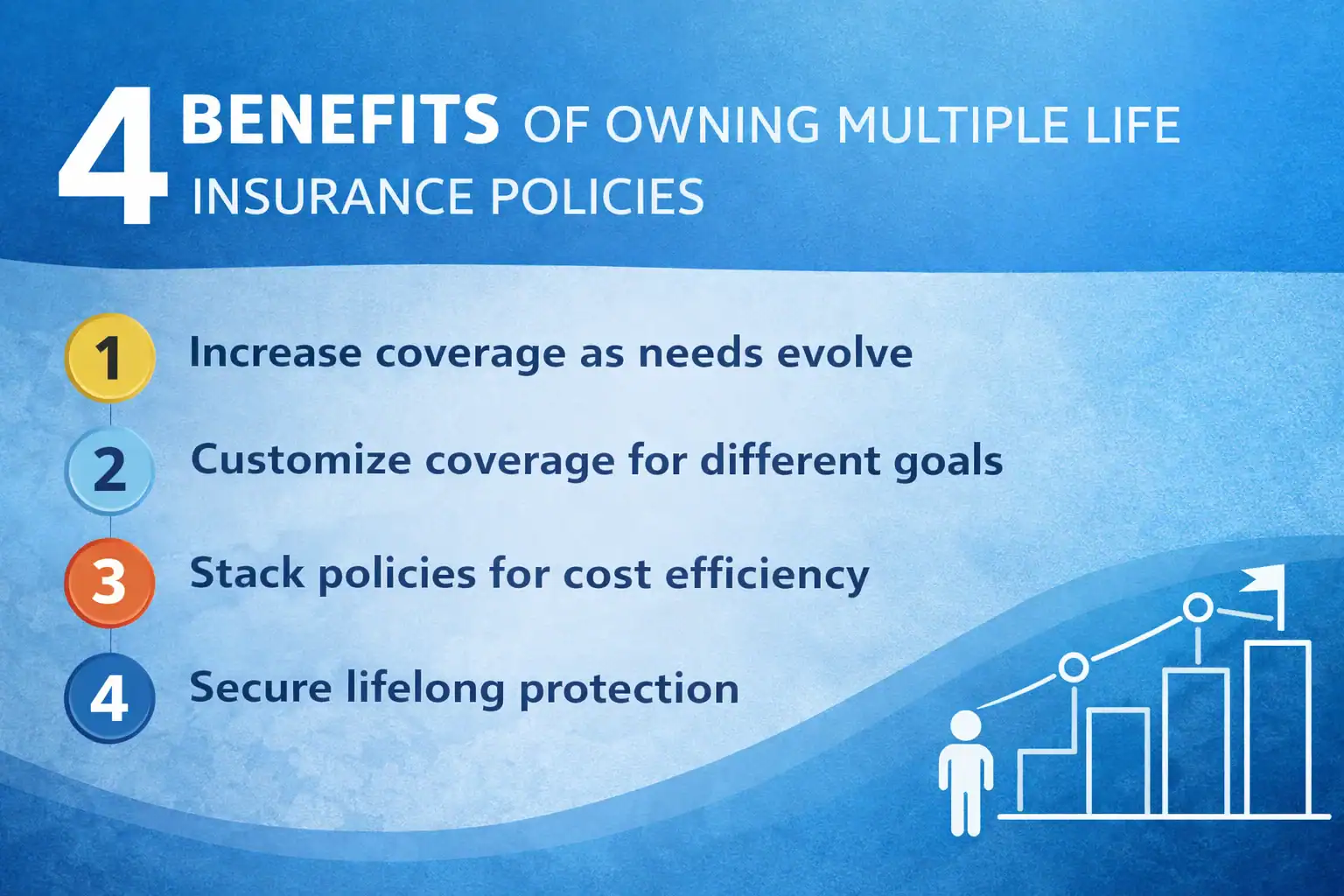
Smart Ways to Structure Multiple Life Insurance Policies (Without Overpaying)
The real benefits of having multiple life insurance policies come from matching each one to a clear need through a simple life insurance needs analysis. Here’s what that looks like:
- Match each policy to a real financial obligation.
- Separate short-term and long-term needs.
- Cover goals like: mortgage, education, lifetime care
- Layer term policies to lower overall cost.
- Avoid overbuying permanent insurance when term coverage works.
- Buy younger and healthier when possible to secure better rates.
For guidance on setting this up properly, explore Special needs financial planning services.
What Is Life Insurance Laddering — And Does It Work for Special Needs Planning?
| Planning Angle | What It Really Means |
|---|---|
| Simple definition | You buy two or three term policies with different end dates instead of one large policy. |
| Example | A parent may carry a 10-year, 20-year, and 30-year term so coverage reduces as debts shrink. |
| When it works well | It fits temporary needs like a mortgage, childcare years, or income replacement. |
| Where it falls short | Lifetime disability care does not expire, so laddering alone may leave a gap. |
| Bottom line | Laddering lowers early costs, but it is not a full lifetime care solution by itself. |
Can You Combine Term and Permanent Life Insurance?
Yes, here’s how blending term and whole life insurance for special needs can balance short-term cost and lifetime protection:
| Coverage Strategy | Why It Matters for Special Needs Families |
|---|---|
| Term insurance | Covers large temporary needs at a lower cost. |
| Permanent insurance | Provides lifetime coverage that does not expire. |
| Cash value feature | Permanent policies build value that can add flexibility later. |
| Trust funding role | Permanent coverage can be structured to fund a Special Needs Trust properly. |
| Why blending works | Term protects today’s income, while permanent protects lifelong care. |
| Cost control approach | Start with affordable term, then add permanent intentionally. |

When Multiple Policies Can Be a Mistake
Having several policies can create strain if the premiums stretch your monthly budget too thin. Over-insurance often looks safe on paper but can hurt real cash flow. When payments become a burden, policy lapse risk increases.
Applying for too much coverage at once can trigger underwriting issues. Poor beneficiary coordination or trust alignment can create problems later. More coverage isn’t better, better planning is better.
How The Autism Voyage Can Help You
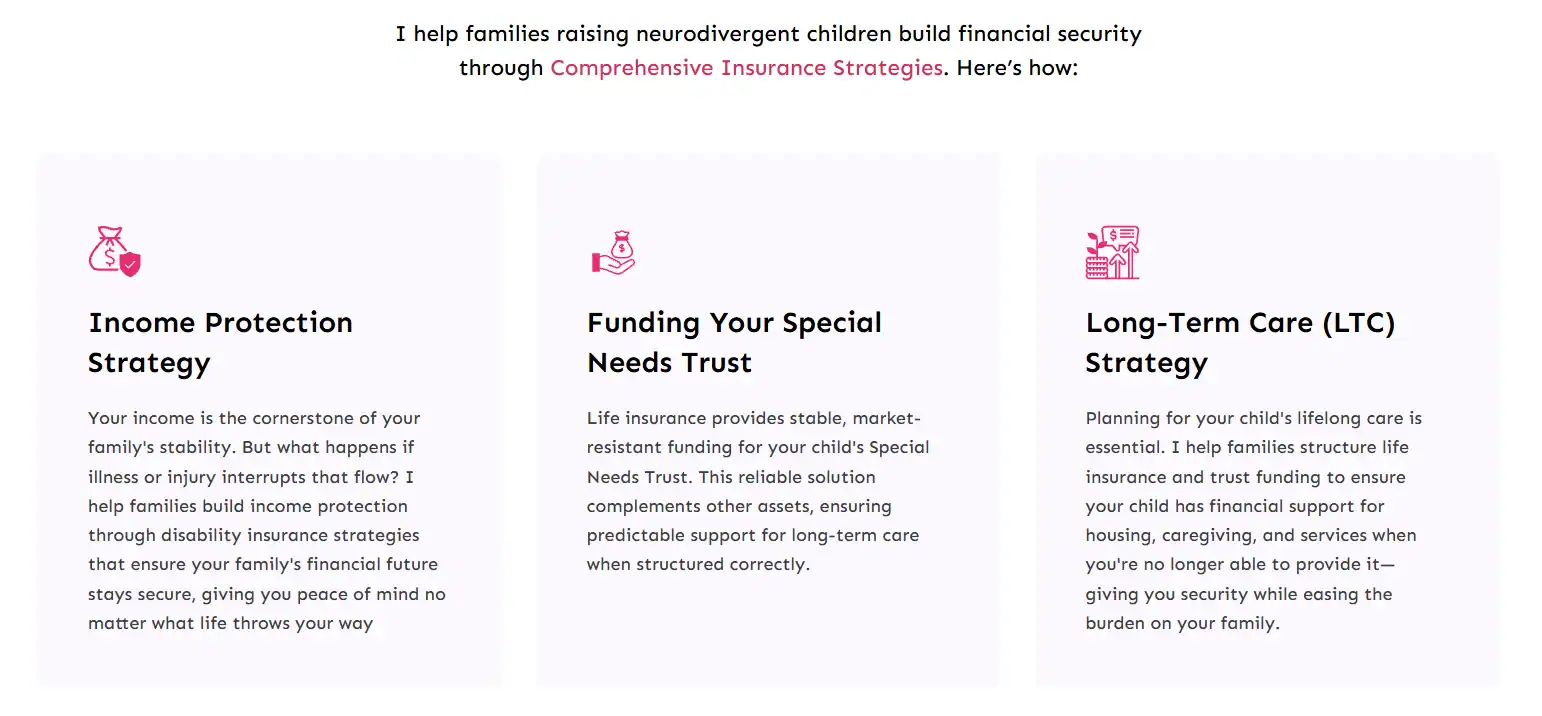
The Autism Voyage helps families structure life insurance properly with clear projections and coordinated long-term special needs planning. Here’s how that support works in practice:
- Review income protection and trust funding needs.
- Project lifetime care costs and blended family risks.
- Coordinate coverage with a Special Needs Trust and guardianship plans.
- Support two-generation planning with estate planning and life insurance.
Need help with your financial journey? Request a consultation today! We’re here for you every step of the way.
The Austism Voyage blog is committed to sharing valuable information with our readers as well as practical insights and resources that can help families prepare for success, especially those with special needs.

Disclaimer: All content on TheAutismVoyage.com is for informational purposes only and is not a substitute for medical, legal, financial, or clinical advice. Please consult licensed professionals as needed.